Orthobiologics & regenerative medicine
Evidence-led biologic treatment planning matched to tissue, imaging, goals, and the complete clinical picture.
Clinical sports-medicine care through Columbia, alongside independent concierge services for individual event coverage, group event coverage, medical-record review, and a growing education library.

A concise introduction to how Dr. Goldwaser approaches sports-medicine decisions—from defining the real problem to matching care with the demands of work, competition, and everyday life.
The player is ready for the forthcoming introduction video. Until it is recorded, this portrait remains the poster frame.
Meet Dr. Goldwaser ↗Injury evaluation, image-guided treatment, orthobiologics, concussion, and return-to-performance planning.
Explore patient care ↗ 02Education, procedural teaching, research, and the forthcoming Provider Vault for clinical protocols.
Enter professional hub ↗ 03Training, appointments, team coverage, accolades, research leadership, and selected publications.
View credentials ↗ 04Independent medical evaluation, record review, causation analysis, deposition, and expert testimony.
Review legal services ↗Meet the physician behind the practice: academic training, team leadership, clinical research, and years of decision-making where performance and health intersect.

Dr. Goldwaser is a sports medicine physician at Columbia University and NewYork-Presbyterian whose practice spans interventional care, regenerative medicine, NCAA and professional team medicine, international ski coverage, ringside medicine, physician education, and clinical research.
He completed sports medicine fellowship training at Lehigh Valley Health Network after residency in family medicine and osteopathic manipulative treatment at Rowan University. He is board-certified in family medicine and holds a Certificate of Added Qualifications in Sports Medicine.


A record across professional, international, collegiate, and combat sports informs the clinical decisions made in the office.


Five connected disciplines and six body-region pathways turn a complex sports-medicine question into a clear, individualized plan.
Every option sits inside one clinical sequence, so evaluation, intervention, recovery, and return-to-activity planning stay connected.
Every plan begins with the same standard: define the real problem, select the most purposeful intervention, and build the path back to the work, sport, and life that matter.
Evidence-led biologic treatment planning matched to tissue, imaging, goals, and the complete clinical picture.
Real-time diagnostic and procedural precision designed to improve accuracy while protecting surrounding structures.
Proactive musculoskeletal oversight for people whose professional, athletic, and personal demands do not pause.
Decisive, context-aware medical leadership for complex cases, teams, and events.
A focused, independent review when the diagnosis, treatment path, or return timeline deserves another expert look.
Symptoms are the starting point—not the diagnosis. Each pathway connects examination and imaging to a treatment strategy built around tissue, function, and the demands of your life.
Pain, swelling, instability, tendinopathy, cartilage and joint concerns.
Rotator cuff symptoms, impingement patterns, instability, and joint pain.
Joint, tendon, muscle, and pelvic-region pain affecting movement and performance.
Ligament, tendon, fascia, joint, and overuse conditions from daily life to competition.
Tendon, ligament, nerve, and workload-related symptoms across the kinetic chain.
Evaluation, symptom-guided management, and return-to-learn and return-to-play decisions.
Whether distance makes travel difficult or an examination is the right first move, your next step begins with a defined route—not a generic intake.
A paid concierge service for expert review of your imaging, relevant records, diagnosis, and proposed treatment path. Begin with a brief inquiry; the practice team will provide secure instructions for sending medical files.
Fee confirmed when you inquire.
Meet in person for history, examination, imaging correlation, and point-of-care ultrasound when indicated—followed by a clear plan for treatment and return.
Schedule by phone · (914) 787-3292Arrange individual or group medical event coverage, request a medical record review, or ask to receive education content library updates. The practice team will follow up to discuss scope, timing, and fees.
For plaintiff and defense counsel seeking independent medical evaluation, record review, causation analysis, deposition, or expert testimony. Begin with a non-confidential matter overview, jurisdiction, representation, and any relevant deadline; the practice team will confirm availability, conflicts, and secure next steps.
For professional athletes traveling, competing abroad, or navigating a time-sensitive decision. Request a paid, streamlined review for imaging context, second-opinion guidance, and coordination with your existing medical team. No medical records are collected through this page; secure instructions follow the initial inquiry.
Scope and fee confirmed before the review begins.
A high-touch model is valuable only when it makes care more coherent. The difference is speed, precision, and a plan that continues after the visit.
Priority pathways for evaluation, imaging decisions, follow-up, and care coordination when timing matters.
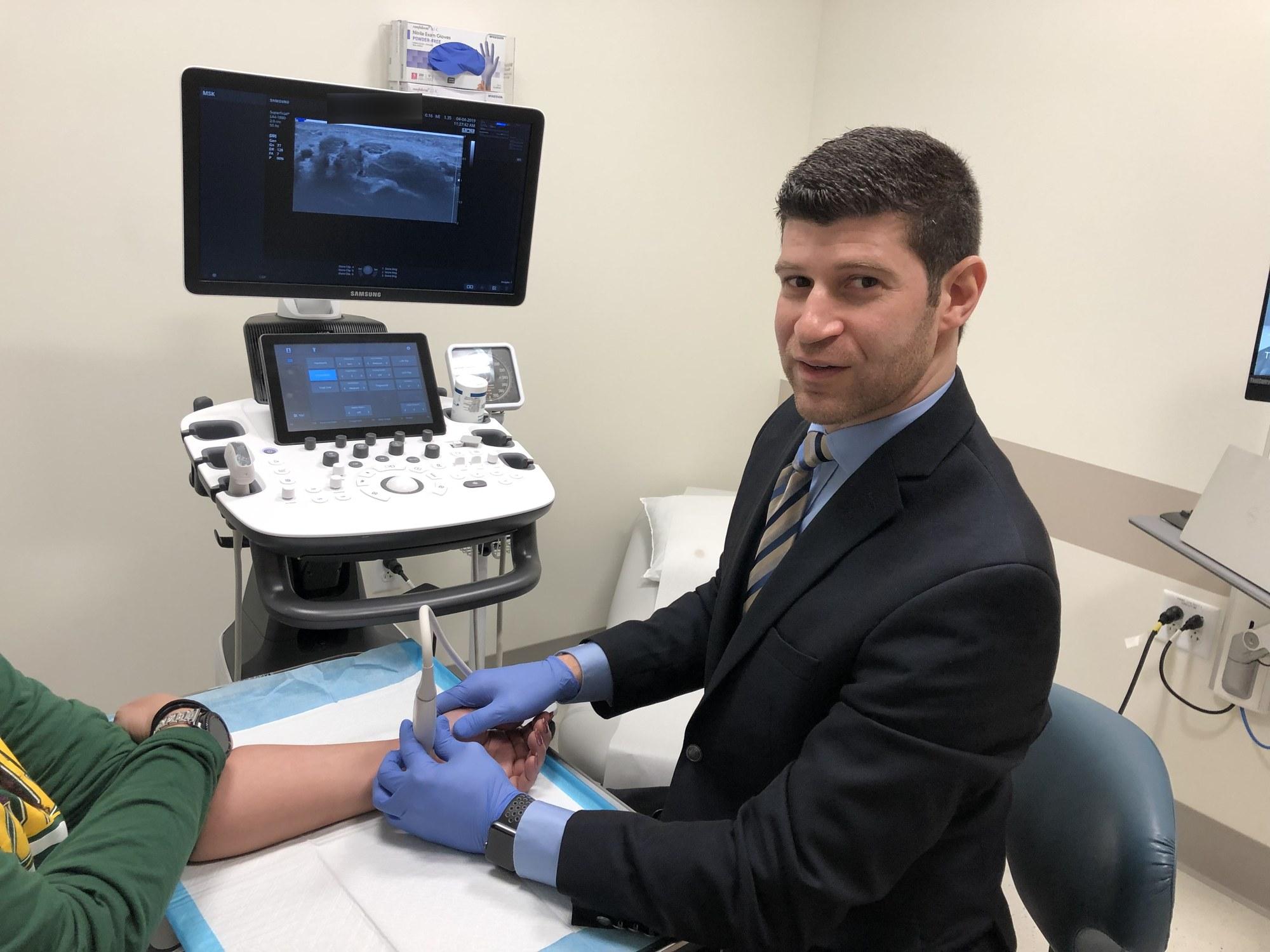
Dynamic, point-of-care imaging helps connect anatomy to symptoms and guides procedures in real time.
Each episode of care fits a longer arc: preserving capacity, reducing recurrence, and sustaining performance.
When your needs fall outside the practice’s scope, Dr. Goldwaser personally finds the right surgeon, hands off your imaging and clinical context surgeon-to-surgeon, and remains your point of contact through recovery.


Recommendations are grounded in imaging, function, current evidence, and a direct conversation about expected benefit, limits, alternatives, and recovery.
These treatments are not interchangeable. The tissue involved, diagnosis, prior care, health history, goals, and strength of the evidence all shape whether any procedure belongs in the conversation.
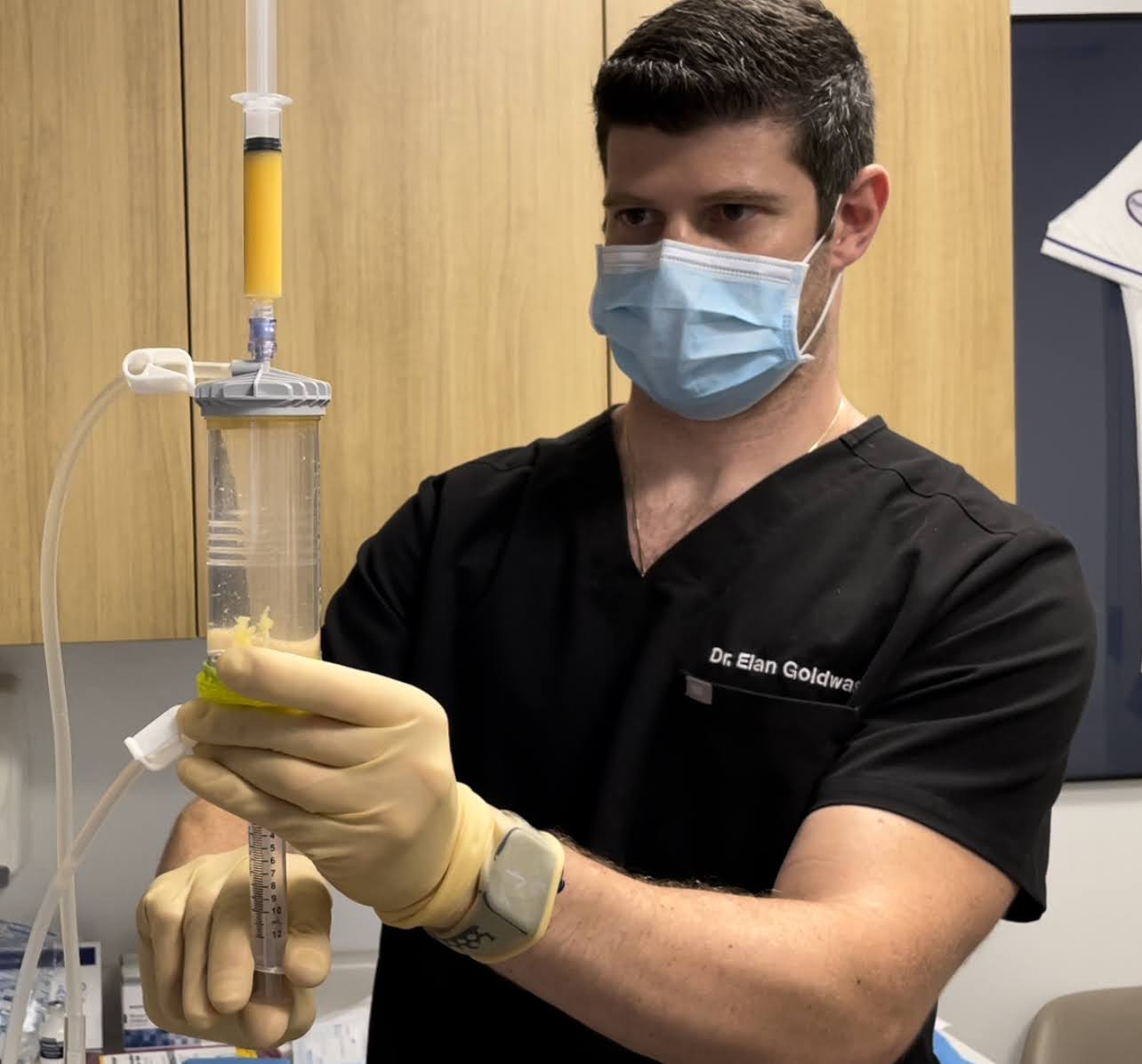
What it is: A preparation made from a patient’s own blood. Processing concentrates platelets and their signaling proteins before the material is placed at a specific target.
How to think about it: Formulations vary. The diagnosis, platelet dose, injection target, and rehabilitation plan matter more than the acronym alone.
What it is: A patient’s own adipose tissue, gently processed in a closed system into smaller tissue fragments. The tissue retains structural and signaling components, including mesenchymal signaling cells.
How to think about it: It is a tissue-based procedure, not a promise of tissue regrowth. Suitability depends on the condition, procedure goals, and a careful discussion of evidence and alternatives.
What it is: A naturally occurring blood protein that can be concentrated from a patient’s own blood as part of an autologous protein solution.
How to think about it: It is discussed for its protein-binding role, but evidence varies by condition. Marketing language should never substitute for diagnosis-specific data.
What it is: Material collected from a patient’s bone marrow and concentrated to retain platelets, growth factors, and marrow-derived cells.
How to think about it: Cell counts and preparations vary. It should be evaluated as one procedural option within a complete treatment and rehabilitation plan.
There is no universal winner. A useful recommendation starts with the diagnosis and the tissue being treated, then weighs the available evidence, medical history, alternatives, recovery demands, cost, and the patient’s goals.
No. Response varies, and no biologic procedure can promise pain relief, tissue restoration, or a return to sport. A responsible consultation includes expected benefit, uncertainty, risks, alternatives, and the possibility that a procedure is not the right choice.
No. Corticosteroid injections and autologous biologic procedures use different materials and have different goals, risks, and evidence profiles. The appropriate choice depends on the diagnosis and clinical context.
Ask what diagnosis is being treated, why a specific preparation was selected, what evidence supports it for that condition, what the alternatives are, what recovery requires, what it costs, and how progress will be measured.
General education only. This comparison does not diagnose a condition or recommend a treatment. Discuss your situation, medication use, risks, and alternatives with your own physician.
Real patient experiences, shared publicly on Healthgrades and Google, speak to the time, clarity, compassion, and clinical judgment behind each visit.
Verbatim patient reviews from Healthgrades, paired with the reviewer name shown publicly—or “Healthgrades patient” when no name is displayed—and the review date.
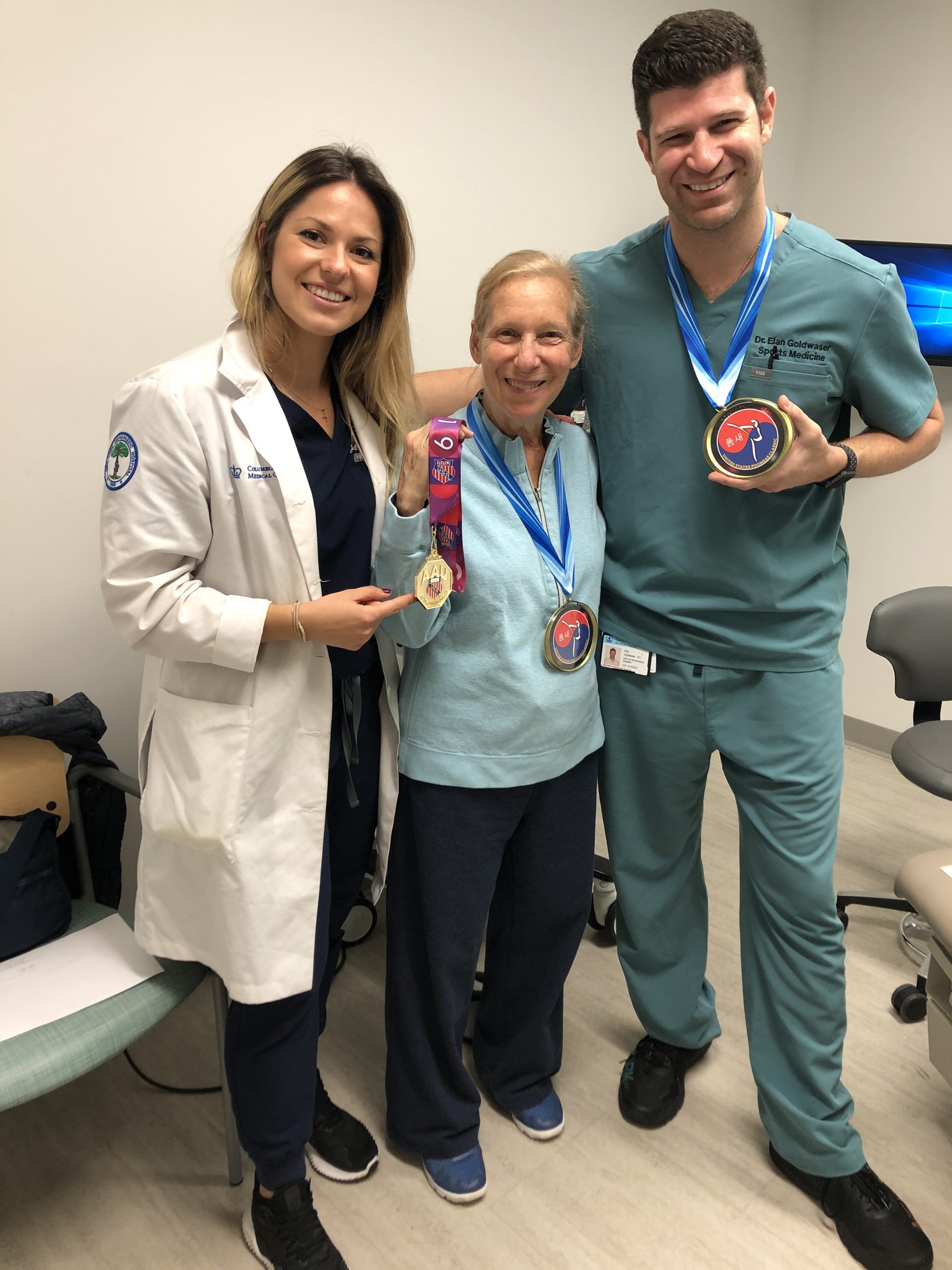
Three moments with patients, shared here with permission.


Preparation and aftercare guidance, evidence-focused Field Notes, media appearances, physician education, and a direct route for questions.
Download the one-page overview of Dr. Goldwaser’s clinical focus, referral pathways, credentials, direct office line, and practice-team contact.
Rehabilitation protocols, procedure videos, forms, consents, and the staged patient-portal roadmap now have a dedicated home.
A concise starting point for preparation and aftercare. Your individualized written instructions always take priority.
These guides are educational and do not replace the instructions issued for an individual procedure. Emergencies require 911 or the nearest emergency department.
Short reads on accuracy, emerging treatment conversations, and the medical systems behind competition.
In the cited study, blind injections reached the intended bursa in 4 of 14 subacromial injections and the glenohumeral joint in 10 of 24 attempts. Imaging guidance makes placement visible rather than assumed.
Read the procedure guide ↓The useful conversation is not whether a therapy is fashionable. It is whether the indication, evidence, sourcing, risks, and monitoring can withstand clinical scrutiny.
Read the CNN feature ↗A national survey of combat-sports licensure requirements examined how medical standards differ across jurisdictions—a reminder that ringside care begins with consistent systems, not only fight-night response.
See selected publications ↓Featured interviews, reporting, and educational appearances spanning orthobiologics, elite sport, training, and sports-injury decision making.
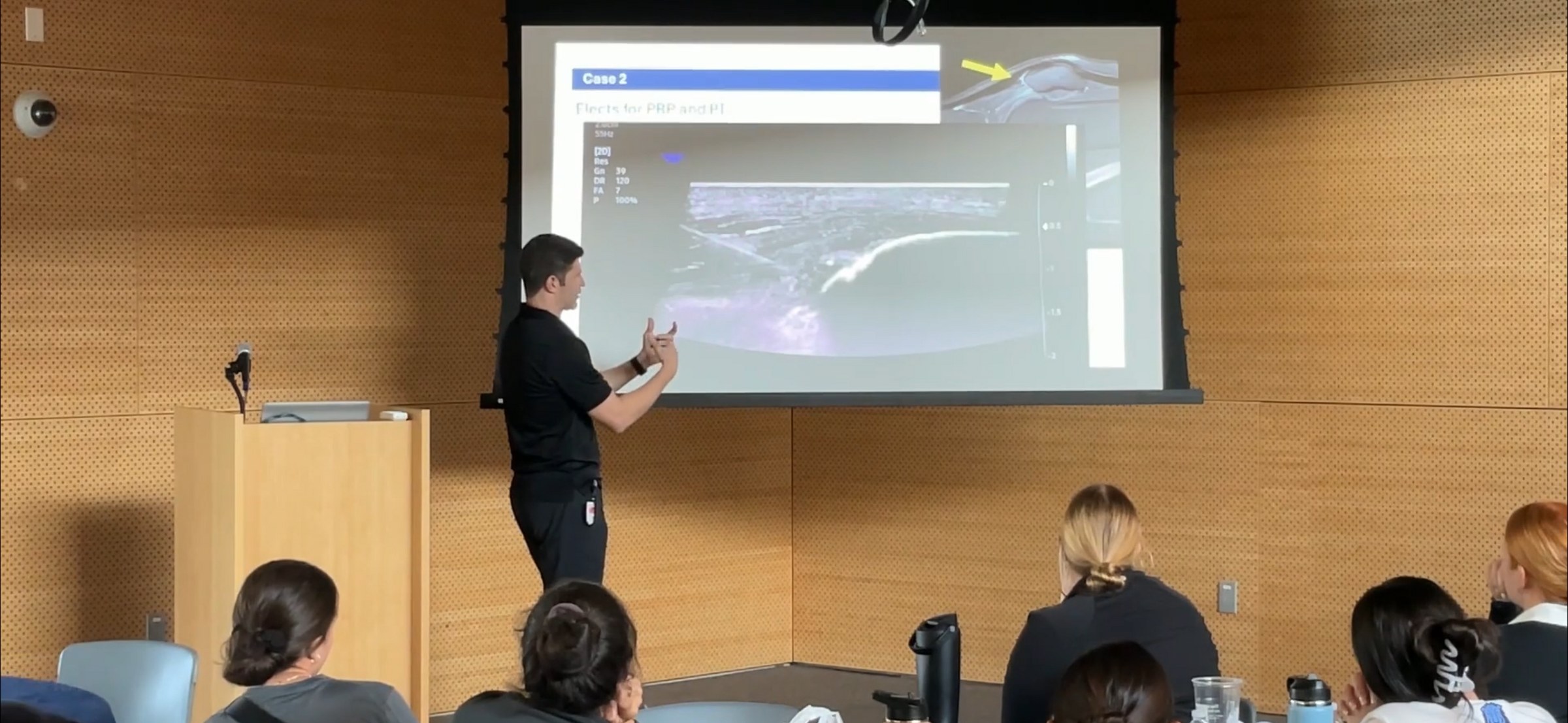
Selected speaking, teaching, and television appearances from Dr. Goldwaser’s own archive.


Clinical research, teaching, and protocol development sit alongside patient care—not apart from it.
Co-author · Department of Orthopedic Surgery, Columbia University Medical Center.
View on PubMed ↗Co-authored work examining medical requirements across combat-sports licensing environments.
A curated Recovery Shop is planned for the tools that support comfort, mobility, and the work between visits. Products will appear only after partner approval and clinical review.
Keep it brief and leave out private medical information. Sending opens your email app with the question addressed to the practice team.
A dedicated home for procedure education, rehabilitation pathways, forms, consents, and—when it is ready—secure patient-portal access.
The future portal will be a separate, authenticated service for private clinical information—not a simulated login on this public website.
This hub will grow into the practical companion to your care plan. Staged items remain clearly marked until clinical review and secure delivery are complete.
Condition- and procedure-specific progressions for mobility, loading, strength, and return to activity are being prepared and clinically reviewed.
Procedure walkthroughs, preparation guidance, recovery milestones, and plain-language explanations will publish on the @DoctorGSports channel.
Visit @DoctorGSports ↗Digital intake documents, procedure-specific consent materials, and supporting forms will be delivered through the secure patient portal—not through an unsecured public form.
Review the current educational starting points for ultrasound-guided injections and orthobiologic procedures. Your individualized written instructions always take priority.
View procedure quick-guides ↗Do not send private medical details by ordinary email. For urgent symptoms, call 911 or seek emergency care.
Choose the route that fits your question—patient care, event coverage, medicolegal review, or a partnership.
Start in the right place and the right team can respond. Please do not send private medical information through ordinary email.
Schedule clinical care through Columbia or call Dr. Goldwaser’s direct office line.
For teams, competitions, productions, organizations, and individuals seeking experienced on-site sports-medicine coverage.
media@drgoldwaser.com
For record review, imaging review, independent medical evaluation, causation analysis, and second-opinion inquiries.
orthoteamgoldwaser@cumc.columbia.edu · (914) 787-3292
For educational programs, speaking, media, brand work, and company partnership inquiries.
media@drgoldwaser.com
Independent concierge engagements are scoped individually. Begin with a brief inquiry, and the practice team will confirm availability, secure next steps, and fees.
A paid, streamlined service for professional athletes facing a time-sensitive question while traveling, competing abroad, or coordinating care across teams.
Physician coverage for an athlete, performer, executive, or traveler whose event demands experienced sports-medicine judgment on site.
Medical planning and physician coverage for teams, competitions, productions, and organizations—built to fit the event and its risk profile.
Focused review of records and imaging to clarify the medical history, questions in dispute, and the most useful next step.
Receive launch news and updates as rehabilitation protocols, procedure explainers, nutrition guidance, and educational videos become available.
Clinical care remains within established practice channels. Concierge inquiries should not include private medical information; secure instructions are provided when records are required.
Objective medical review for plaintiff and defense counsel, grounded in clinical practice, sports-medicine judgment, and precise communication.
Focused examination and opinion within a clearly defined scope.
Structured analysis of medical records, imaging, treatment course, and functional history.
Clear separation of mechanism, diagnosis, pre-existing factors, treatment, and prognosis.
Direct, clinically grounded communication for attorneys, courts, and fact finders.
Tell us what you are trying to return to, what has already been tried, and what kind of support you are seeking. Please do not include sensitive medical details; clinical information belongs in the secure patient portal.